UPDATE: MAY 2026
The world of notebooks is incredibly diverse! But amidst the maze of lined, dot grid, grid, and blank notebooks, which one is the perfect choice for you?
1. LINED NOTEBOOK: THE "NATIONAL" FAVORITE FROM SCHOOL DAYS
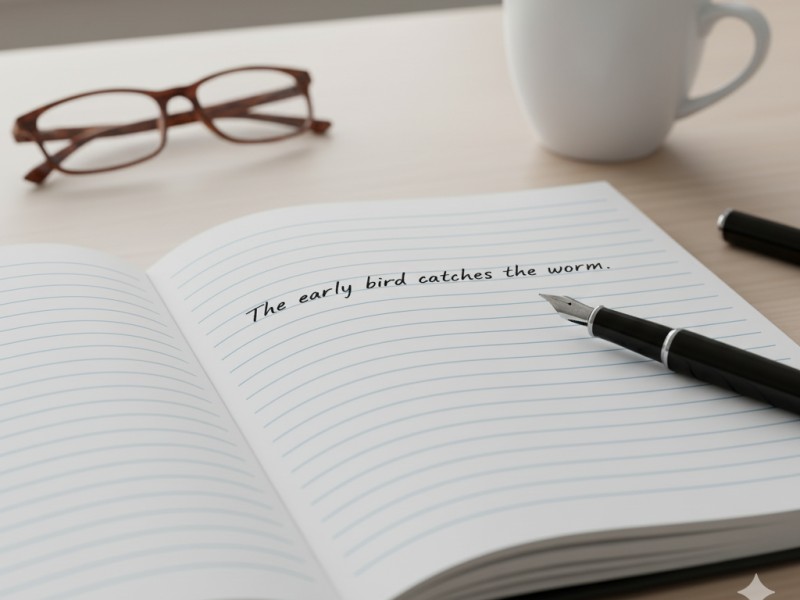
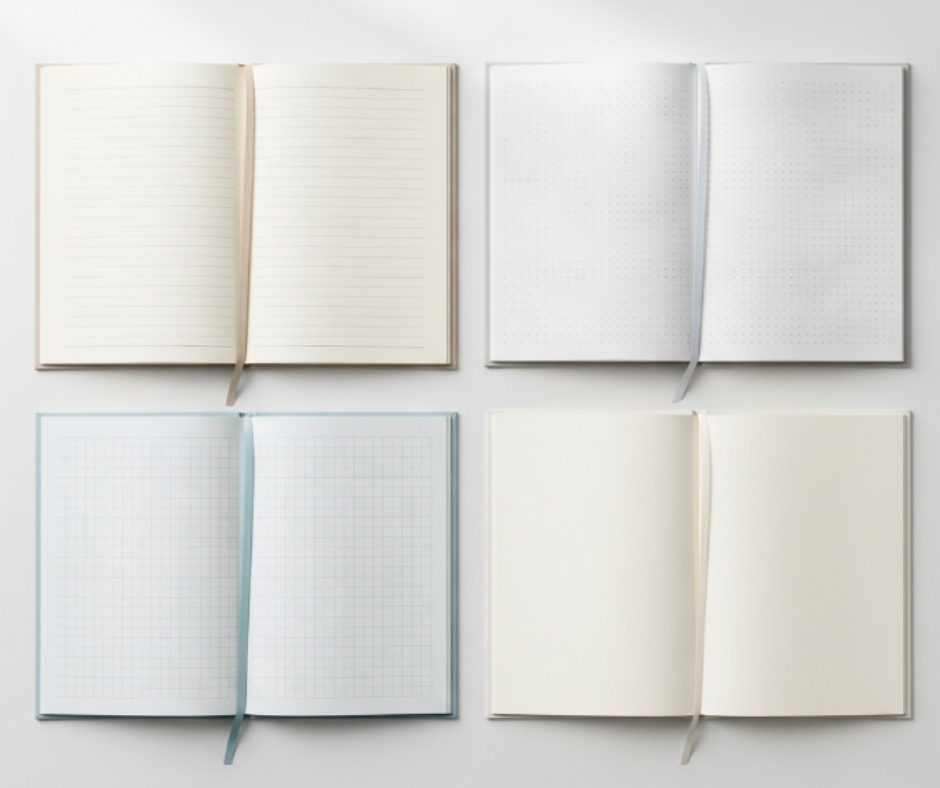
Concept: This is the "national" notebook, featuring parallel horizontal lines – a familiar companion from school days.
Applications:
- Lecture Notes: Perfect for recording long lectures, requiring neatness and straight alignment.
- Writing, Journaling: The lines prevent your handwriting from "flying around" freely, keeping pages clean and easy to read.
- To-do lists: Quick and clear bullet points and notes.
Pros:
- Easy to use: Extremely familiar, requiring no special skills.
- Content-focused: Helps you concentrate entirely on writing without being distracted by the page structure.
- Widely available: Found everywhere with countless designs and price points.
Cons:
- Less flexible: Difficult to draw charts, mind maps, or other creative layouts.
- Restrictive: The lines can sometimes feel rigid, limiting creativity.
2. DOT GRID NOTEBOOK: THE "RISING STAR" OF THE CREATIVE WORLD

Concept: Instead of long lines, a dot grid notebook features a network of small, faint, equally spaced dots. This is a delicate blend of structure and freedom.
Applications:
- Bullet Journaling: This is the perfect pairing! The dots serve as an ideal guide for freely designing layouts, from monthly, weekly, daily calendars to habit trackers and goal pages.
- Design, Sketching: Easily adjust proportions, draw logos, typography, or prototype website/app interfaces.
- Structured Notes: Can be used for straight writing while also easily creating tables and diagrams without looking cluttered.
Pros:
- Maximum flexibility: "Handles" writing, drawing, and designing. The dots provide enough guidance but aren't too prominent to cause distraction.
- Spacious, clean: Pages look "lighter" and more aesthetically pleasing than lined or grid notebooks.
- Encourages creativity: Opens up endless possibilities for personalizing your notebook.
Cons:
- Requires getting used to: If you're accustomed to lined notebooks, it might take a little time to adapt to writing on a dot grid background.
- Harder to find: Compared to lined notebooks, dot grid notebooks are not as widely available in all bookstores.
3. GRID NOTEBOOK: THE "EXPERT" OF PRECISION
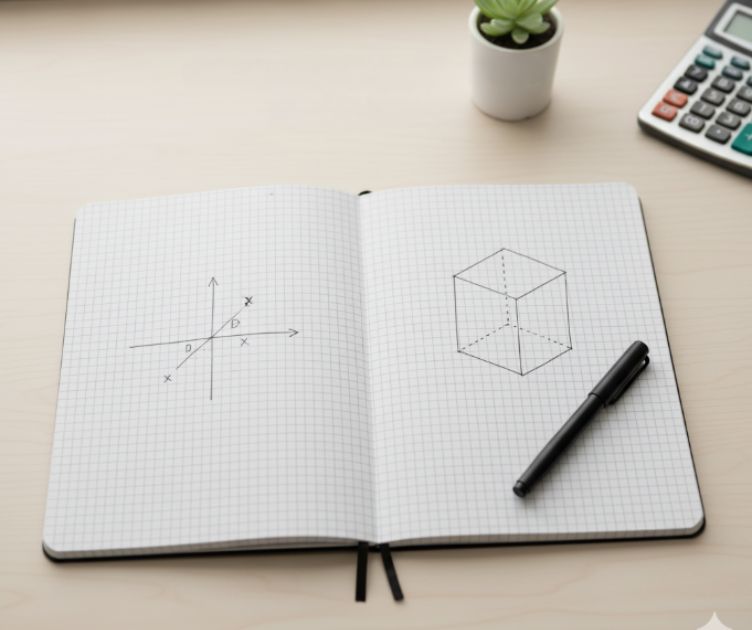
Concept: Essentially, a grid notebook (also known as a squared or graph notebook) is a type of notebook with paper pages pre-printed with horizontal and vertical lines forming a regular square grid. These squares are a wonderful "framework" for taking notes, drawing diagrams, sketching layouts, or even playing tic-tac-toe during breaks.
Applications:
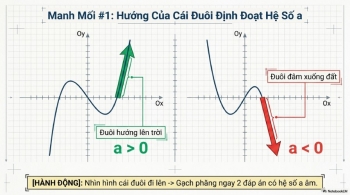
- Studying natural sciences: Drawing function graphs, spatial geometry, and plotting data tables has never been easier.
- Pixel art, architecture design: The squares are intuitive and precise tools for measuring proportions.
- Accounting, inventory management: Recording data and calculations that require absolute alignment.
Pros:
- Clear structure: Provides maximum support for tasks requiring precision and organization.
- Versatile: Can be used for writing, technical drawing, and design.
- Easy alignment: All lines and shapes become simple to manage.
Cons:
- Dense grid: Can be visually overwhelming and overshadow the main content if you're only using it for general writing.
- Less "free-flowing": The square structure can sometimes feel a bit too "technical" and dry.
4. PLAIN/BLANK NOTEBOOK: THE "PLAYGROUND" OF ABSOLUTE FREEDOM
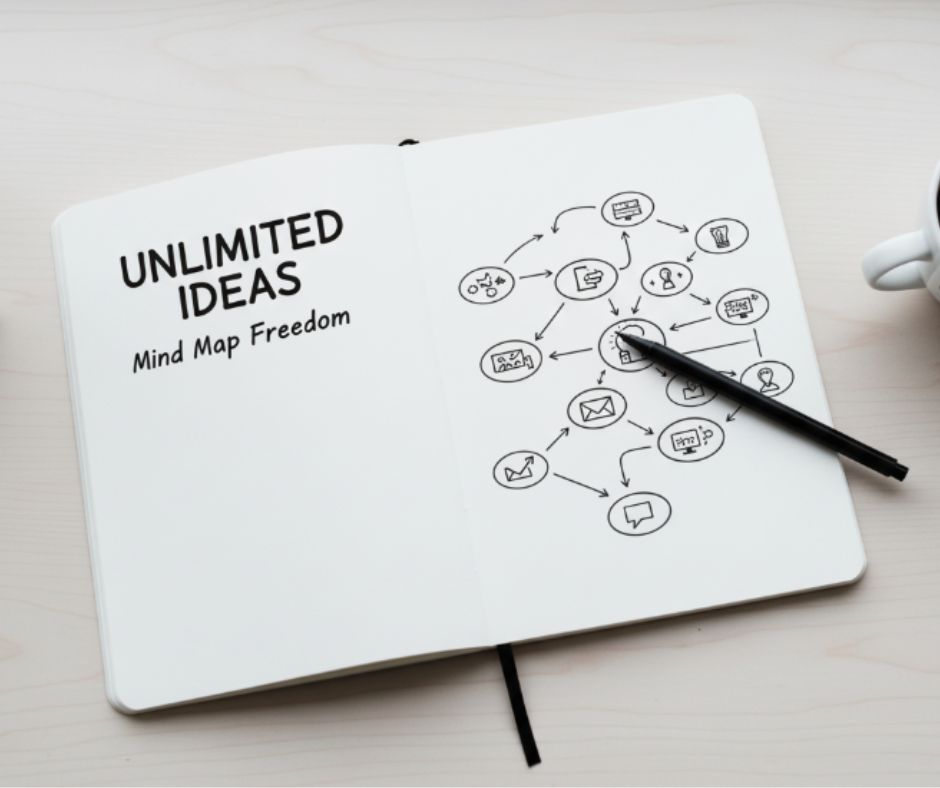
Concept: As the name suggests, this type of notebook features pristine blank pages, devoid of any lines or dots.
Applications:
- Drawing, sketching, doodling: The number one choice for artists to freely express ideas without any constraints.
- Brainstorming, mind mapping: A completely open space for ideas to connect in the most free-flowing way.
- Calligraphy: Allows the writer to fully concentrate on each stroke.
Pros:
- Infinite freedom: No limits whatsoever to your creativity.
- Content stands out: Every stroke and word becomes the focal point on the page.
- Pure writing experience: Fully feel the smooth glide of the pen on paper.
Cons:
- Difficult to write in a straight line: If you're not used to it, your handwriting can easily become crooked and messy.
- Not for beginners: Requires users to have the ability to arrange their own layouts.
CONCLUSION
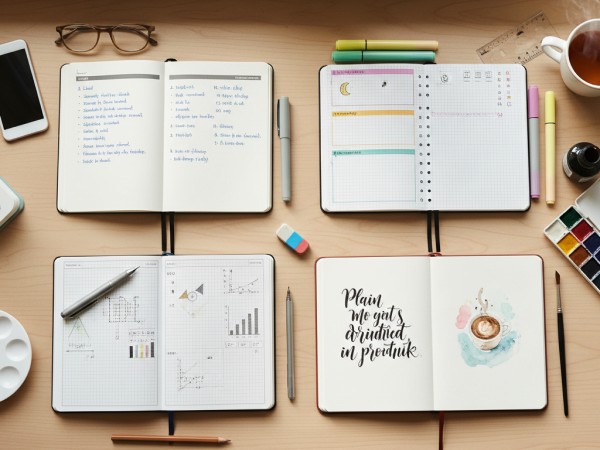
No notebook type is inherently the best; there's only the one that best suits your needs and personality.
- If you're a diligent note-taker and appreciate tradition, stick with a lined notebook.
- If you're a "planner-holic" with a creative spirit who enjoys freedom within a framework, the dot grid notebook was made for you.
- If your work demands precision, logic, and structure, don't hesitate to choose a grid notebook.
- And if you're an artist with a free-spirited soul, eager to break all limits, a plain/blank notebook is your canvas for limitless expression.
We hope this article helps you find your ideal companion on your journey to conquering amazing ideas!
See more: Choose a "love" pen according to Vibe Gen Z: Level ups tips for taking notes 2025