
Does Biology class ever feel like you are lost in the "Amazon Jungle"?
Are you drowning in a sea of Latin names, confusing photosynthesis processes, or endless anatomical lists?
Don't panic! Today, the Teen Study Companion team is handing you a "survival map" to navigate that jungle.
That map is the Mind Map-the secret weapon helping thousands of students worldwide "crush" their Biology exams.
1. WHY DO TEENS NEED MIND MAPS FOR BIOLOGY?
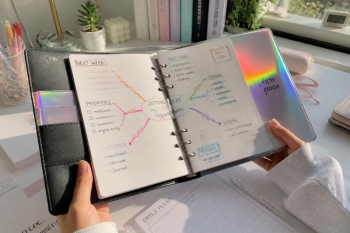
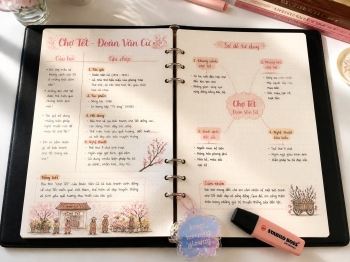
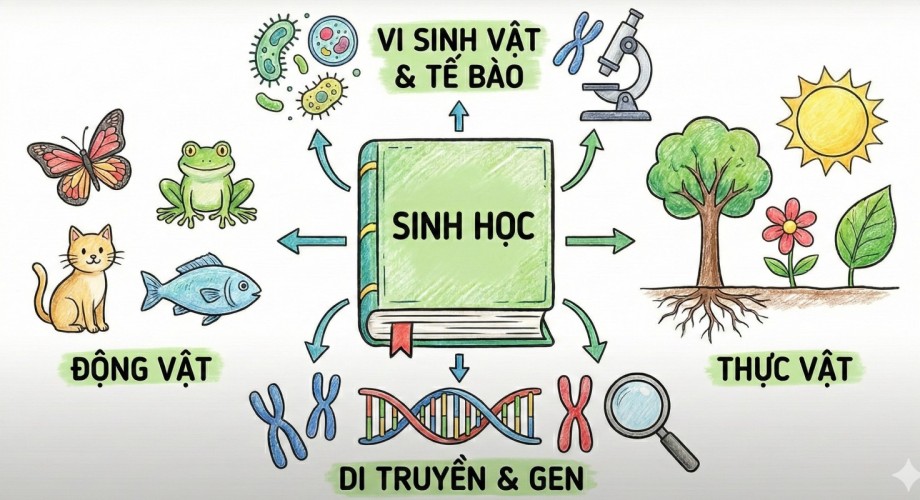
Simply put, mind mapping is a way to "draw" your lesson. Instead of notebooks filled with boring walls of text, you use images, colors, keywords, and arrows to visualize knowledge.
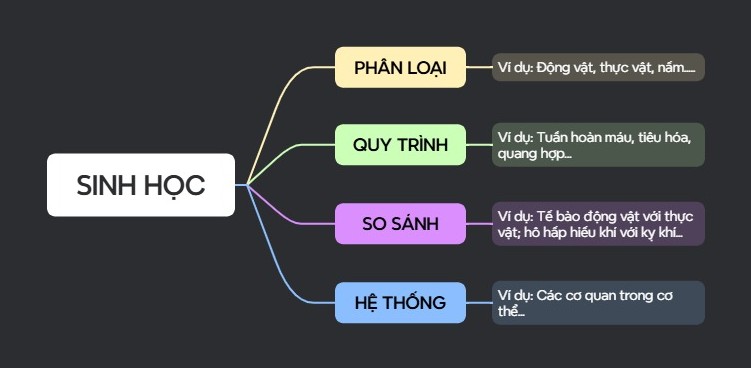
Biology is unique because it contains a lot of:
- Classification: Animals, plants, fungi kingdoms...
- Processes: Blood circulation, digestion, photosynthesis...
- Comparisons: Plant cells vs. Animal cells, Aerobic vs. Anaerobic respiration...
- Systems: Organs within the body...
When you use a Biology mind map, you "activate" your brain's visual memory mode. This helps you see the "Big Picture" and saves you hours of revision time.
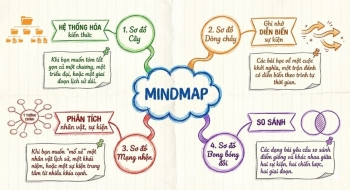
2. THE 4 "GAME-CHANGING" MIND MAPS FOR BIOLOGY
Not all maps are created equal! Depending on the topic, choose the right "tool" from the list below:
🌳 A. Tree Diagram - The King of Classification
When to use: When you need to categorize groups of organisms or list structural components.
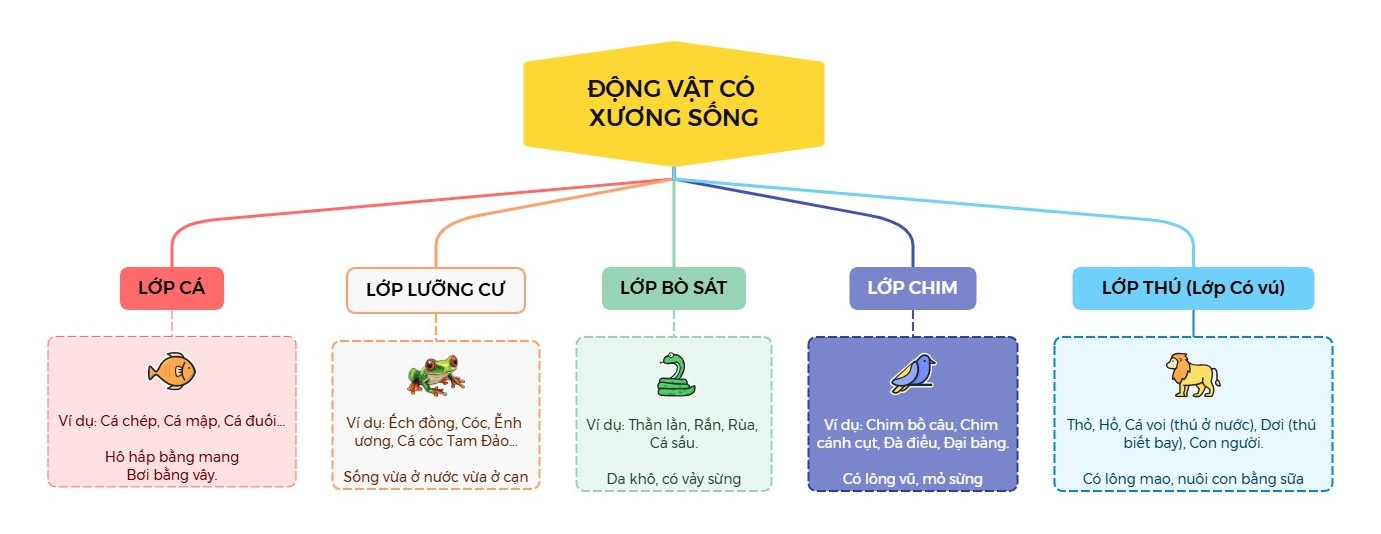
Example: Vertebrates Classification
Draw the ROOT as "Vertebrates."
Branch it out into 5 Big Branches: Fish → Amphibians → Reptiles → Birds → Mammals.
Under each branch, add examples like Carp, Frogs, Lizards...
This type ensures you never get "tangled" up when learning about Phylum, Class, or Order.
🕸 B. Spider Map - The Summary Master
When to use: When you need to describe detailed characteristics of a single subject.
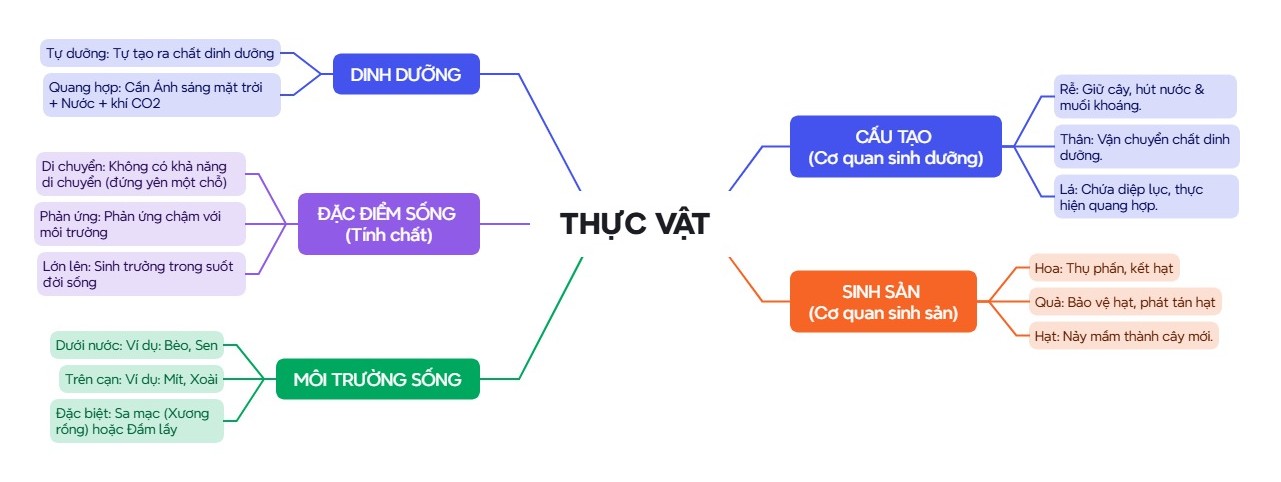
Example: Characteristics of Plants
Write "PLANTS" in the center.
The spider legs radiating outward will be: Nutrition (Photosynthesis), Structure (Root, Stem, Leaf), Reproduction (Flowers, Fruits), Habitat...
➡ C. Flow Chart - The Process Wizard
When to use: When the lesson involves a timeline or a step-by-step sequence.
Example: Life Cycle of a Frog
Eggs → Tadpole (with tail) → Tadpole (with legs) → Froglet → Adult Frog.
Use arrows to connect the steps. You will instantly see the magical development of the organism.

⭕ D. Venn Diagram (Bubble Map) - The Comparison Expert
When to use: When you need to find SIMILARITIES and DIFFERENCES between two things.
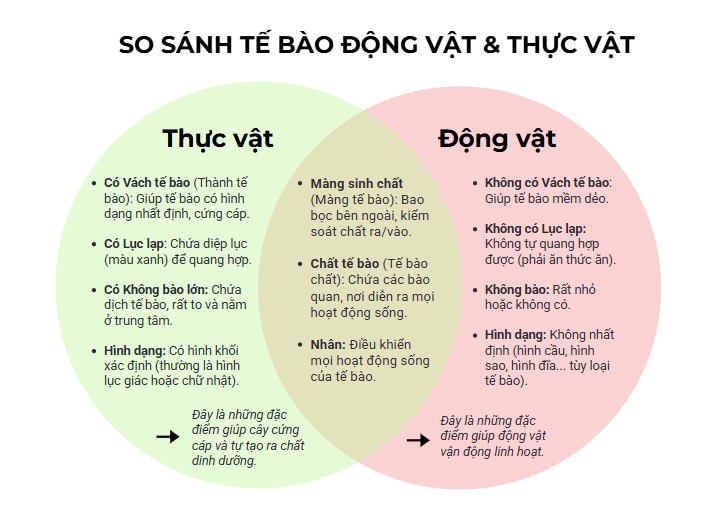
Example: Comparing Animal Cells & Plant Cells
Draw two overlapping circles.
- Intersection (Same): Cell membrane, Nucleus, Cytoplasm...
- Separate parts (Different): Plants have Chloroplasts and Cell Walls; Animals do not.
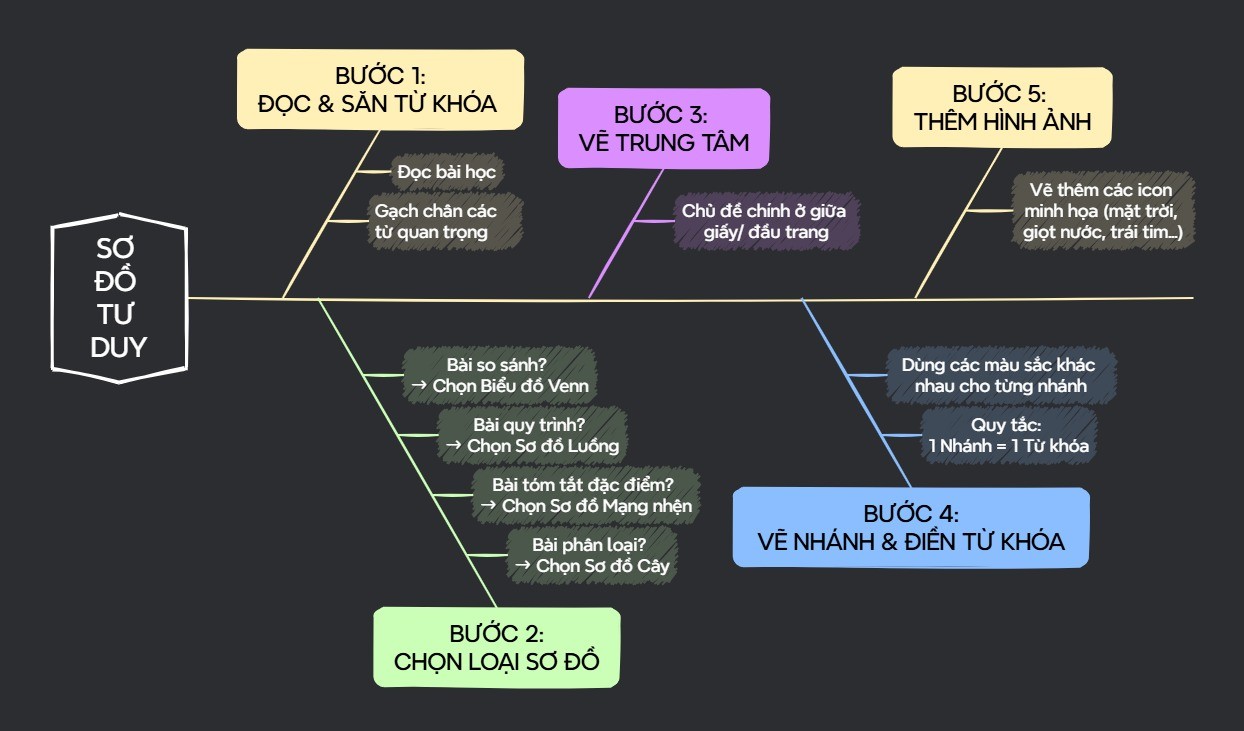
3. THE 5-STEP PROCESS TO DRAW A "PERFECT 10" MIND MAP
Don't rush into drawing immediately! Follow these steps to ensure your map is both beautiful and accurate:
- Step 1: Read & "Hunt" for Keywords
Read the lesson and underline important words (Nouns, Verbs). Ignore the filler words.
- Step 2: Choose Your Map Type
Classification lesson? Choose Tree Diagram.
Summary of features? Choose Spider Map.
Process/Timeline? Choose Flow Chart.
Comparison? Choose Venn Diagram.
- Step 3: Draw the Center
Draw an image representing the main topic in the middle of the paper (e.g., Draw a leaf if studying Photosynthesis).
- Step 4: Draw Branches & Add Keywords
Use different colors for each main branch. Remember the rule: 1 Branch = 1 Keyword.
- Step 5: Add "Spice" with Images
Add icons (sun, water drop, heart...). Tip: The brain remembers images 6 times better than text!
💡 Pro Tip: If you don't know the basic strokes yet, check out our article: What is a Mind Map? The Ultimate A-Z Guide for teens to Study smarter & Ace exams to practice your skills!
4. "SURVIVAL TIPS" TO AVOID LOSING POINTS
✅ DO: Use short keywords. Instead of writing "Photosynthesis is the process of...", write "Photosynthesis = Light + CO2 + H2O".
✅ DO: Personalize it. Draw in your own style and add funny notes to make studying less stressful.
❌ DON'T: Write long paragraphs on the map. A mind map is not a place for dictation!
❌ DON'T: Make it too messy with too many branches. If the chapter is long, break it down into smaller maps.
CONCLUSION

A Biology mind map is the golden key to unlocking high scores. Don't worry about drawing "ugly" pictures; as long as you understand it, it works. Start drawing today so the upcoming exam is no longer a nightmare!
Good luck, and may you fall in love with the colorful world of Biology! 🌱🔬
Read more: Learn 3 times faster: how to draw "root" (branching) diagrams for Literature, History, and Geography