
Do you ever find yourself in these frustrating situations?
-
🤦♀️ Memory leaks: You learn new words, but they seem to vanish from your brain just a few days later?
-
🤯 Grammar chaos: Tenses, structures, and rules get all jumbled up, leaving you confused?
-
✍️ Writer's block: You read a long passage but remember nothing, or you stare at a blank page with no ideas for your speaking or writing assignments?
It’s time to discover a game-changer: Mind Maps. Whether it’s vocabulary, grammar, speaking, or writing, learning English is about to get a whole lot easier. Let’s get started!
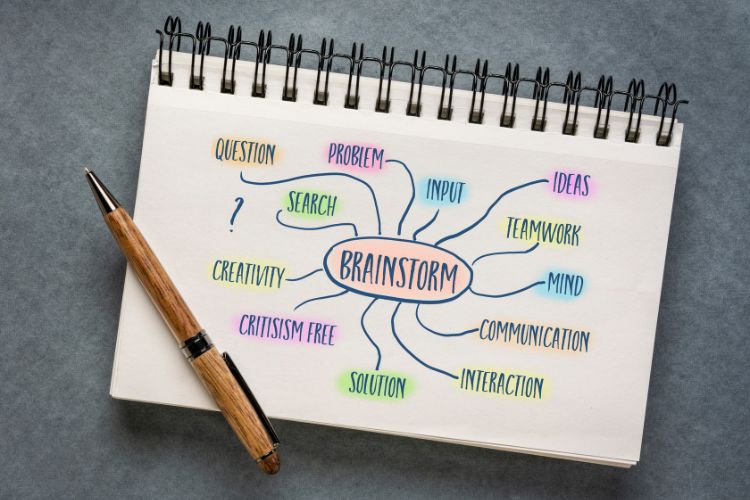
What is a Mind Map and Why is it a Teen's "Secret Weapon"?
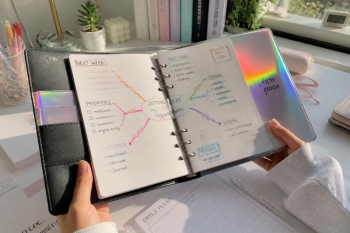
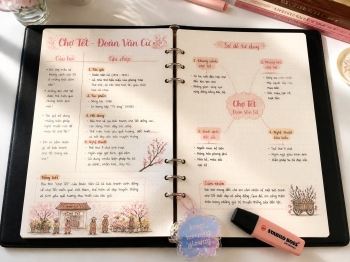
What is a Mind Map? A Mind Map is a method of organizing information into a logical "picture" using colors, images, and keywords. Think of it as a map for your brain, allowing you to see the entire landscape of knowledge visually rather than just reading boring lists of text.
Read more: What is a Mind Map? The Ultimate A-Z Guide for teens to Study smarter & Ace exams
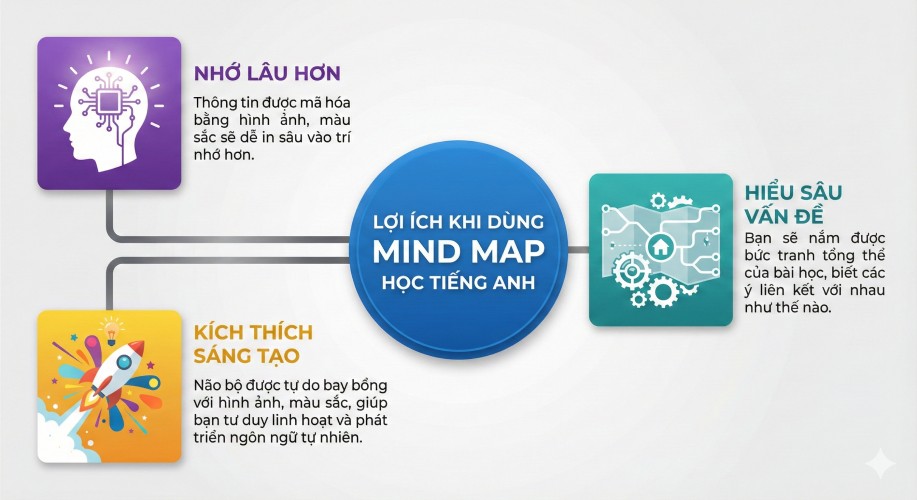
Benefits of using a Mind Map for learning English:
-
Boost Memory: Information encoded with images and colors is imprinted deeper into your long-term memory.
-
Deep Understanding: You grasp the "Big Picture" of a lesson and understand how different ideas link together.
-
Spark Creativity: Mind mapping frees your brain to think flexibly, helping you develop natural language reflexes.
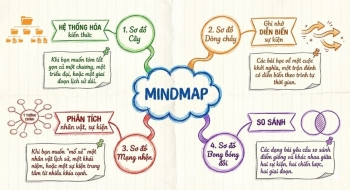
4 Essential Types of Mind Maps to Master Middle School English
Are you ready to turn Mind Mapping into your daily study habit? Let's explore the 4 most popular types of maps and how to apply them effectively.
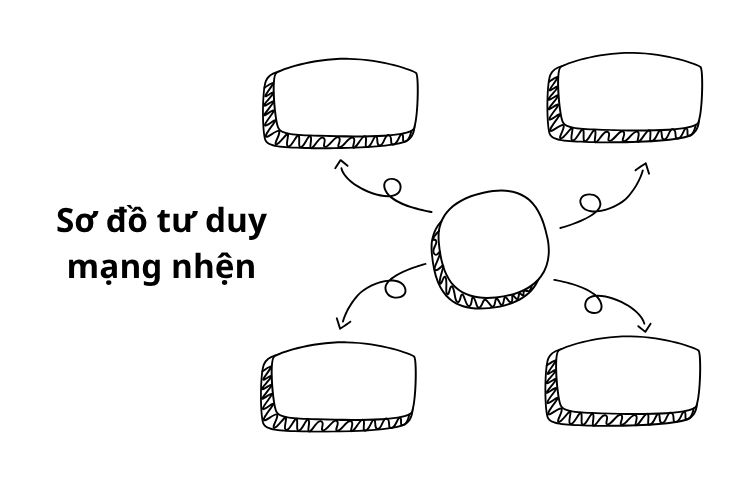
1. The Spider Map – The Expert on Vocabulary & Ideas
Characteristics: The main topic sits in the center, with sub-ideas radiating outward like the legs of a spider. This is flexible and perfect for broad topics.
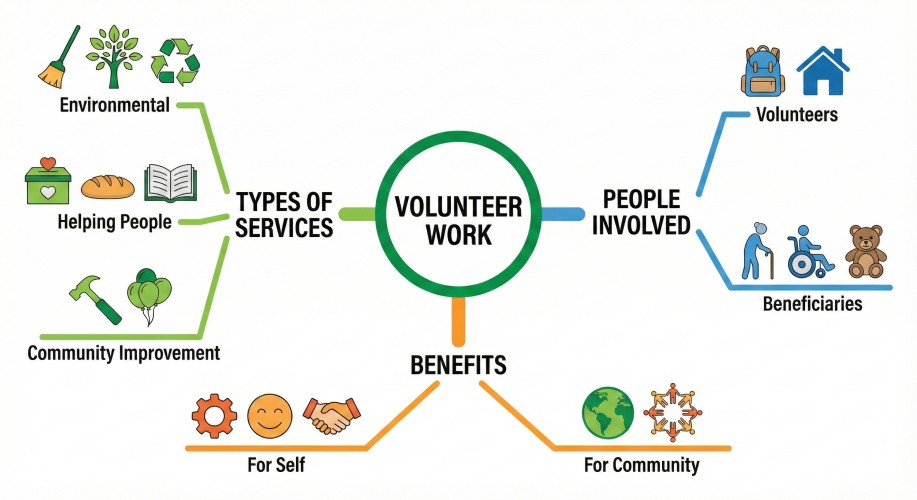
a. Learning Vocabulary by Topic: Stop memorizing isolated words! Here is how to conquer 7th-grade or 8th-grade vocabulary themes.
-
How to do it: Write the main theme in the center (e.g., "Community Services").
-
Draw large branches outward: "Types of services," "People involved," "Benefits."
-
From each large branch, draw smaller twigs with specific words and mini-illustrations:
-
Types: charity, volunteer work, clean-up...
-
People: volunteers, elderly people, orphans...
-
Benefits: help others, make friends, connect...
-
-
Benefit: Words are learned in context and linked together, making them "stick" effectively.
b. Brainstorming for Speaking & Writing:
-
When you need to prepare for a speaking topic or write a paragraph, use a Spider Map to organize thoughts fast.
-
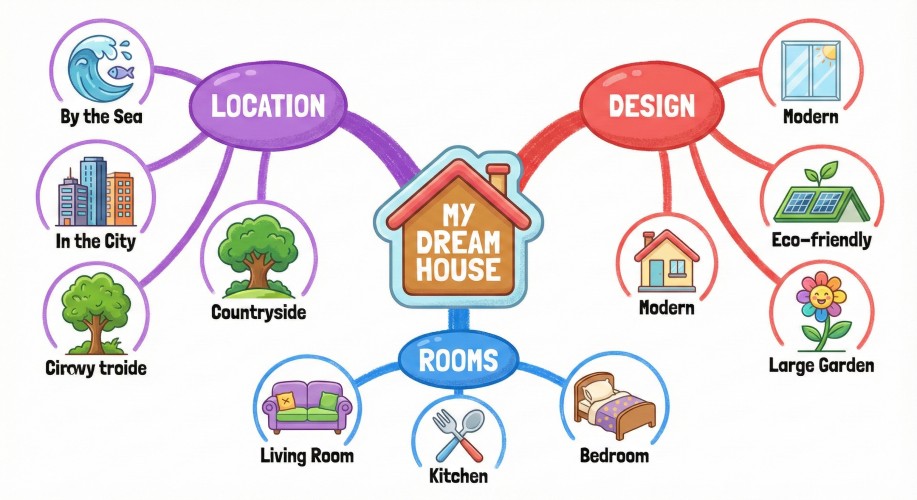
Example: Topic "My Dream House".
-
Center: My Dream House.
-
Branches: Location (beach, city), Design (modern, eco-friendly), Rooms (gaming room, library), Furniture.
-
Benefit: Ensures you never run out of things to say and keeps your essay structured.
2. The Tree Map – The Expert on Classification & Grammar
Characteristics: A hierarchical structure moving from general to specific, looking like a tree with a trunk, branches, and leaves.
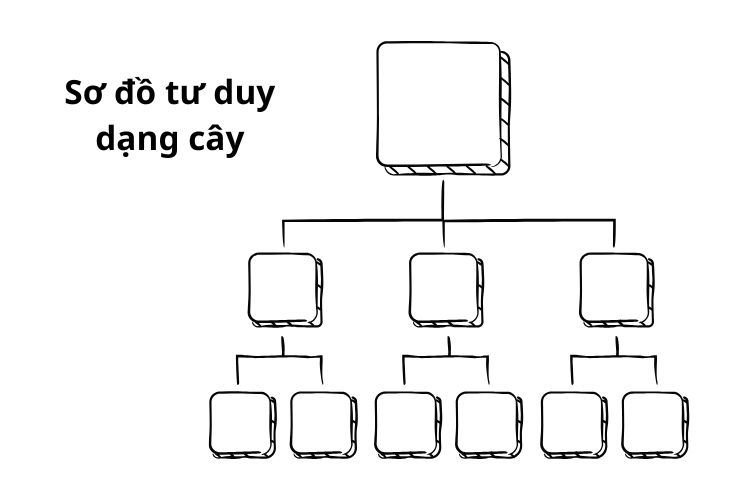
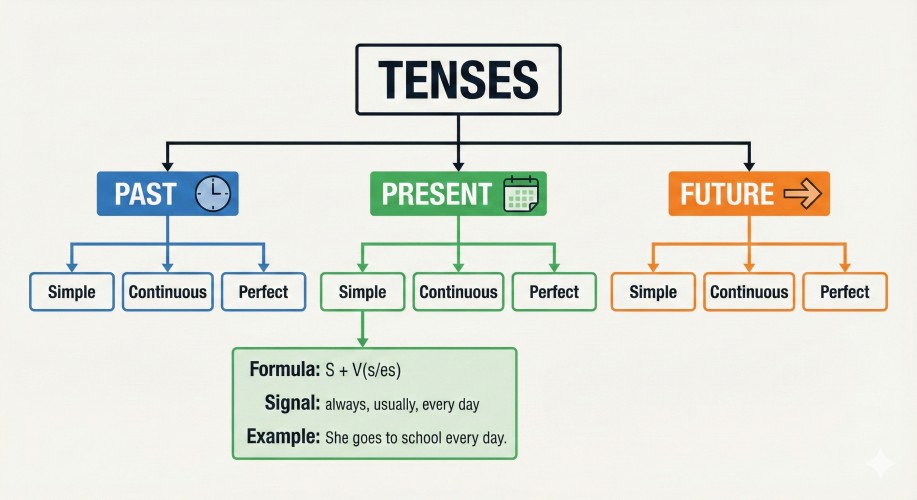
a. Systematizing Grammar: How do you remember all 12 English tenses? The Tree Map is the answer.
-
Trunk (Root): "English Tenses"
-
Large Branches: Present, Past, Future.
-
Small Branches: Simple, Continuous, Perfect, Perfect Continuous.
-
Leaves (Details): Add the formula, signal words (e.g., always, yesterday), and one example sentence for each.
-
Example for Present Simple: S + V(s/es) | Signal: often, usually | Ex: She goes to school.
-
-
Benefit: Helps you visualize the logic of grammar rules and avoid confusing similar tenses.
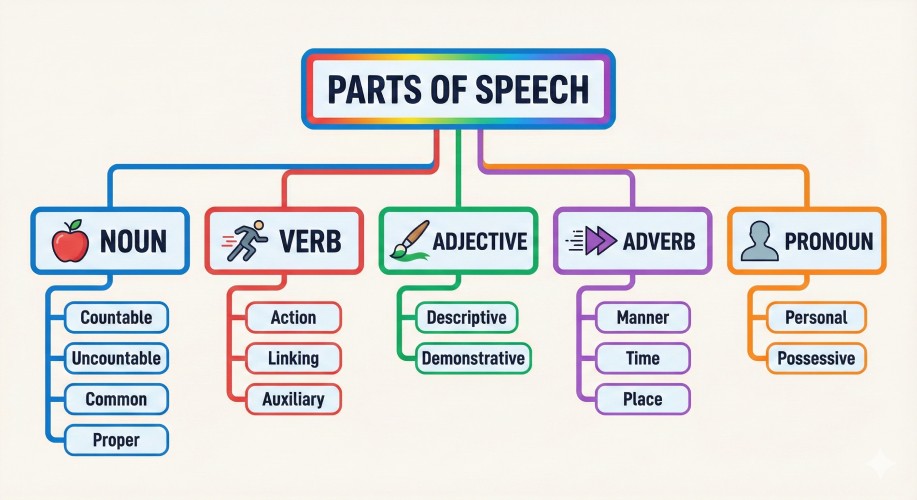
b. Classifying Parts of Speech:
-
Root: Parts of Speech.
-
Branches: Noun, Verb, Adjective, Adverb...
-
Sub-branches: Noun -> Countable vs. Uncountable.
-
Benefit: Clarifies the function of each word type, helping you build grammatically correct sentences.
3. The Flow Map – The Expert on Process & Storytelling
Characteristics: Boxes connected by arrows, showing a sequence, order, or timeline of events.
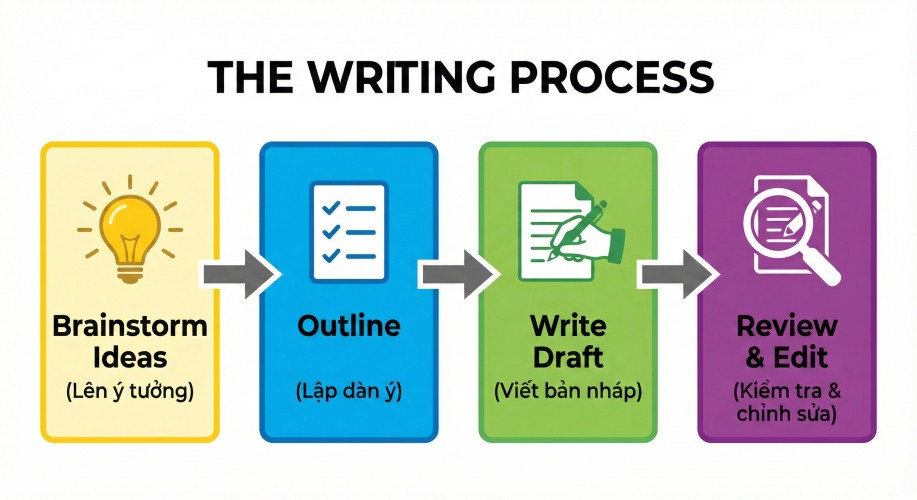
a. The Writing Process: Want to write coherent English essays? Follow the flow.
-
Box 1: Brainstorm Ideas ➡️
-
Box 2: Outline ➡️
-
Box 3: Write Draft ➡️
-
Box 4: Review & Edit.
-
Benefit: Ensures you don't skip critical steps in creating a high-quality essay.
b. Summarizing Story Plots:
-
Great for Reading Comprehension tasks. Summarize a story from your textbook:
-
Introduction ➡️ Rising Action ➡️ Climax ➡️ Resolution.
-
-
Benefit: Helps you retell the story easily and understand the plot deeply.
4. The Double Bubble Map – The Expert on Comparison
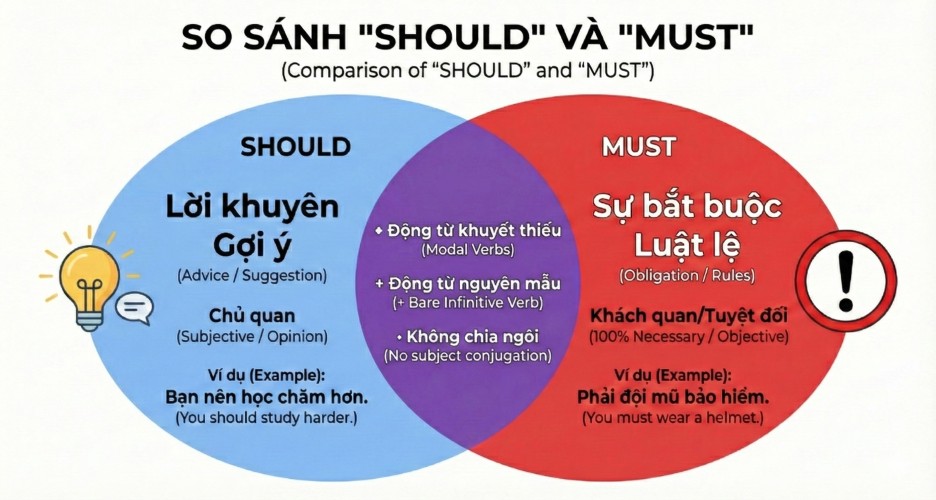
Characteristics: Two main circles that overlap. The unique parts show differences, while the overlapping center shows similarities.
a. Comparing Grammar or Vocab:
-
Example: Distinguish "Should" vs. "Must".
-
Bubble 1 (Should): Advice (You should study).
-
Bubble 2 (Must): Obligation/Rules (You must wear a helmet).
-
Center (Similarities): Both are Modal Verbs; both are followed by V-infinitive.
-
-
Benefit: Eliminates confusion between easily mixed-up concepts.
b. Comparing Ideas in Reading:
-
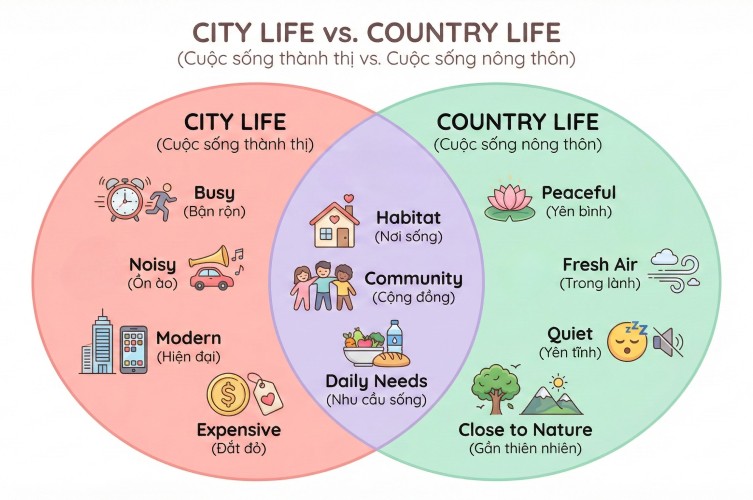
Example: Compare City Life vs. Country Life.
-
Bubble 1 (City): Noisy, modern, busy.
-
Bubble 2 (Country): Peaceful, fresh air, quiet.
-
Center: Both are places to live, have communities.
-
-
Benefit: Develops critical thinking and prepares you for compare-and-contrast essays.
5 Quick Tips for Effective Mind Mapping
To make your Mind Map for learning English truly powerful, remember these tips:
-
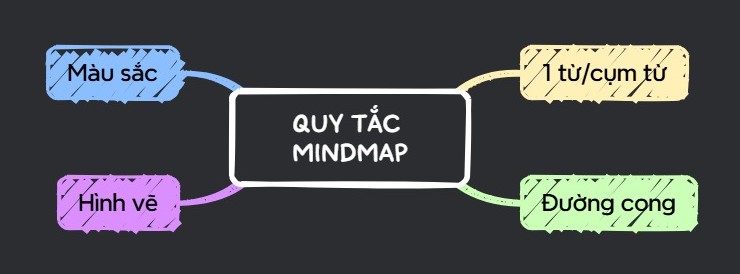
Use Color & Images: Don’t be shy! Use a different color for each main branch and add doodles. It triggers visual memory.
-
Use Keywords Only: Avoid long sentences. Use single words or short phrases to keep the map clean and memorable.
-
Clear Organization: Be creative, but keep the structure logical so you can review it easily later.
-
Practice Regularly: The more you draw, the faster you will get at organizing your thoughts.
-
Group Study: Create a Mind Map with friends. Swapping ideas will help you learn from each other.
Conclusion: Conquer English with Mind Maps!
A Mind Map is not just a study tool; it is a way of thinking that helps you develop comprehensive language skills.
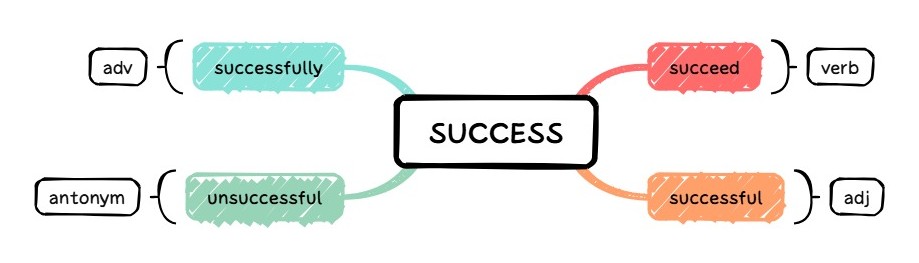
Action Step: Start today! Pick one English topic you find difficult (a long vocabulary list, a tricky grammar point, or an upcoming essay topic) and try drawing a Mind Map for it. You will be surprised by the results!
Good luck on your journey to mastering English!