
Have you ever stared at a blank page during a History exam, feeling your mind go completely empty? Are your notebooks filled with walls of text that look like ancient scrolls - where you read the first line and immediately forget the last?
If you nodded "Yes," welcome to the world of Mind Maps. This is the "secret weapon" helping millions of students worldwide "outsmart" the toughest exams and level up their study game.
WHAT IS A MIND MAP? WHY IS VISUAL LEARNING A GAME CHANGER?
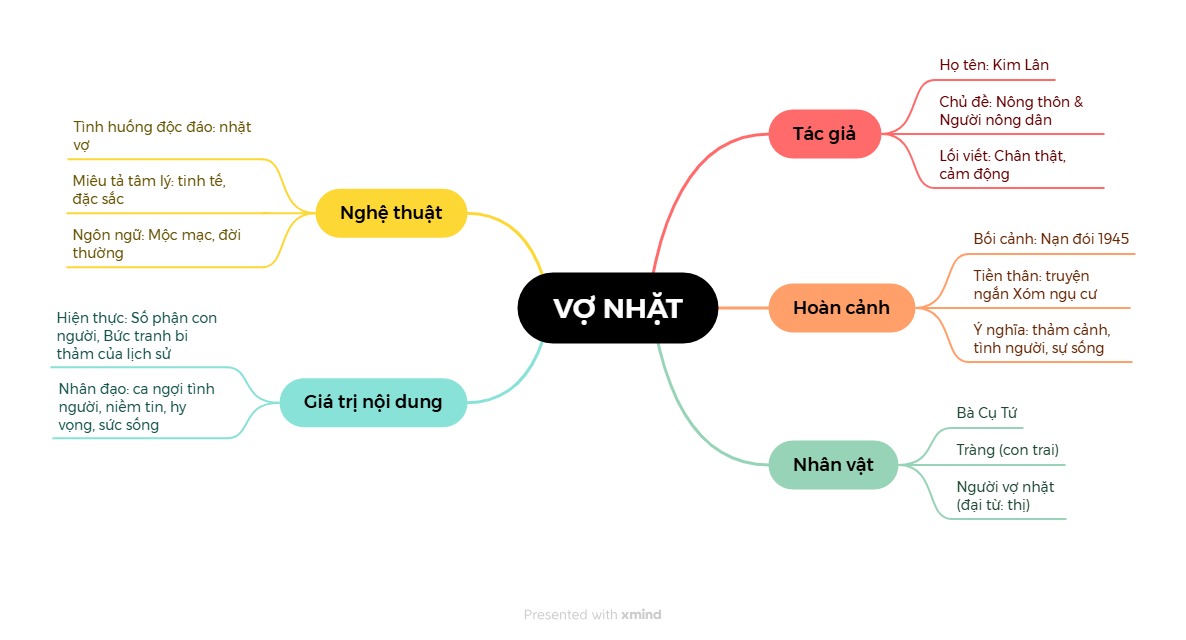
What is a Mind Map?
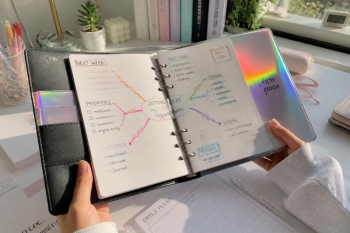
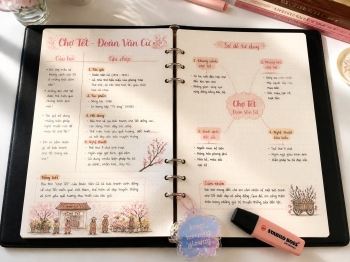
A Mind Map is a visual note-taking method that uses images, colors, and keywords to organize information into a logical "picture," rather than boring, linear lines of text. Think of it as a map of your own thoughts.

Why does your brain "Love" Mind Maps?
Our brain is divided into two hemispheres:
- Left Brain: Good at numbers, words, logic, and lists.
- Right Brain: Good at colors, images, imagination, and rhythm.
Traditional studying (writing dictation style) only uses the Left Brain. Mind Mapping activates BOTH hemispheres simultaneously. The result?
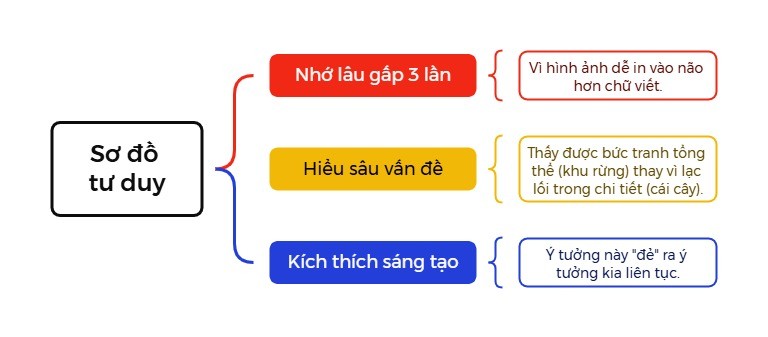
- 3x Better Memory: Because images are easier to recall than text.
- Deeper Understanding: You see the "forest" (the big picture) instead of getting lost in the "trees" (tiny details).
- Boosted Creativity: One idea triggers another instantly, perfect for brainstorming.
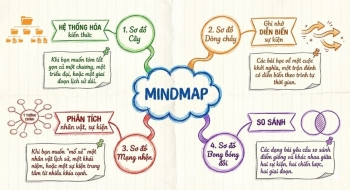
TOP 4 POPULAR TYPES OF MIND MAPS & EXAMPLES
Depending on the subject or topic, choose the right "weapon" from the list below:
Tree Map - The King of Classification
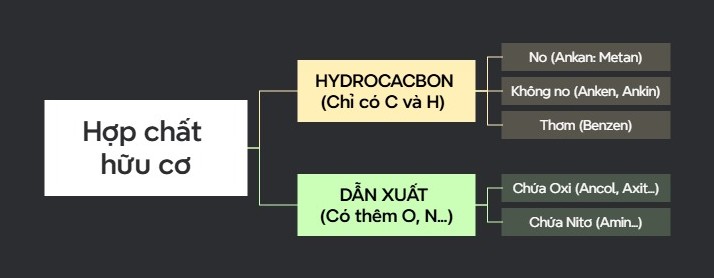
This is the most basic form, looking like a tree with Roots (Topic) -> Big Branches (Categories) -> Small Branches (Details). It is perfect for classifying information.
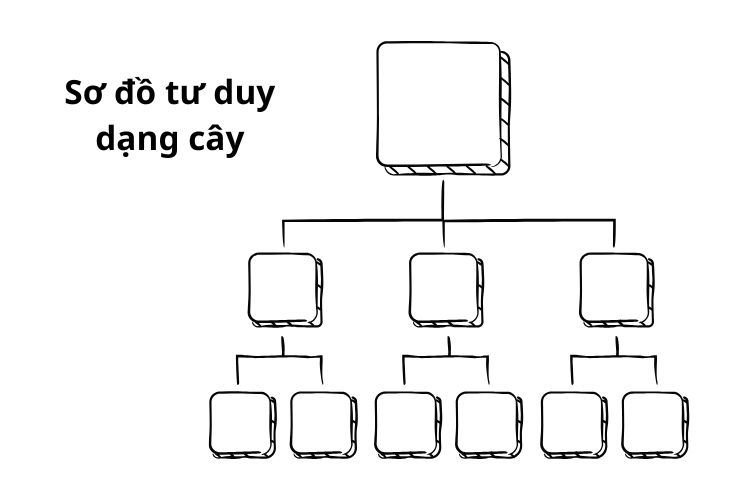
Example: Biology (The Animal Kingdom)
ROOT: ANIMAL KINGDOM
- BIG BRANCH 1: VERTEBRATES (With backbone)
- Small branch: Mammals (Dog, Human)
- Small branch: Birds (Eagle, Penguin)
- Small branch: Reptiles (Snake)
- BIG BRANCH 2: INVERTEBRATES (No backbone)
- Small branch: Arthropods (Spiders, Insects)
- Small branch: Mollusks (Snails)
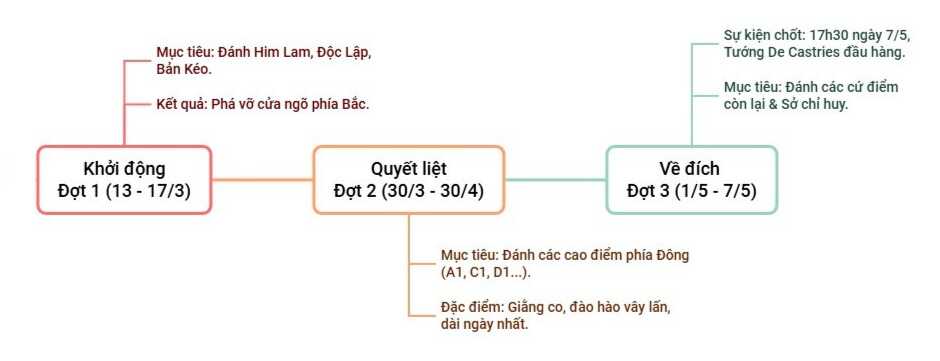
Flow Map - The Master of Process
Boxes connected by arrows indicating direction. This is used for History timelines, scientific processes, or life cycles.
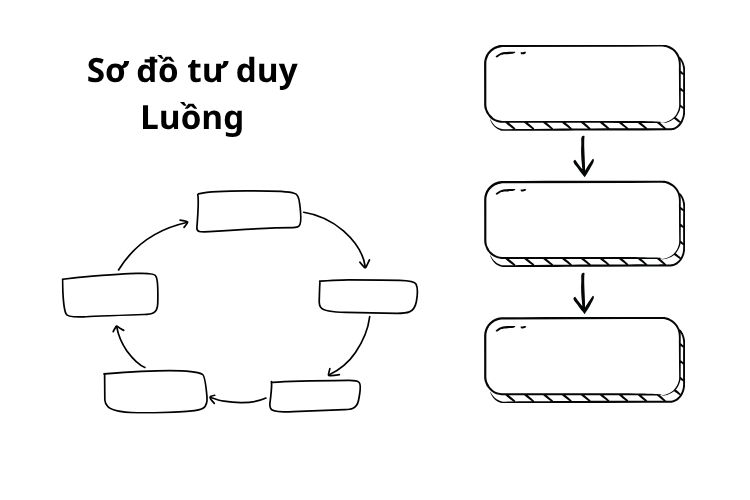
Example: Geography (The Water Cycle)
- Box 1: Evaporation (Sun heats water -> turns to vapor).
Arrow ➡️
- Box 2: Condensation (Vapor cools -> forms clouds).
Arrow ➡️
- Box 3: Precipitation (Rain/Snow falls to Earth).
Arrow ➡️
- Box 4: Collection (Water gathers in oceans/lakes).
Spider Map - The Idea Generator
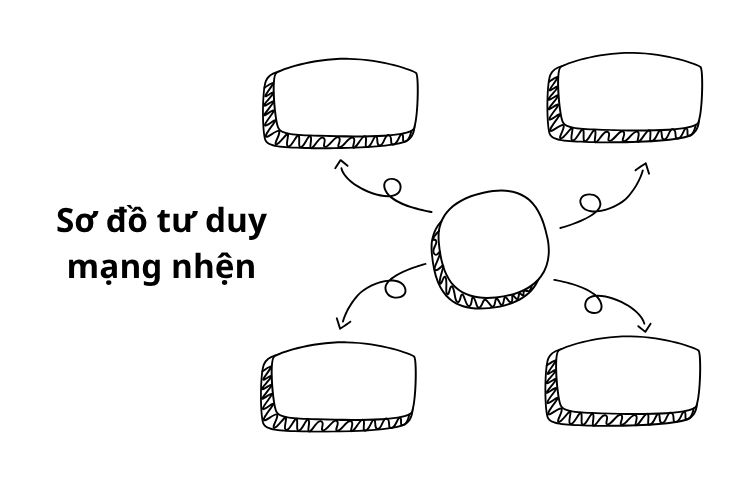
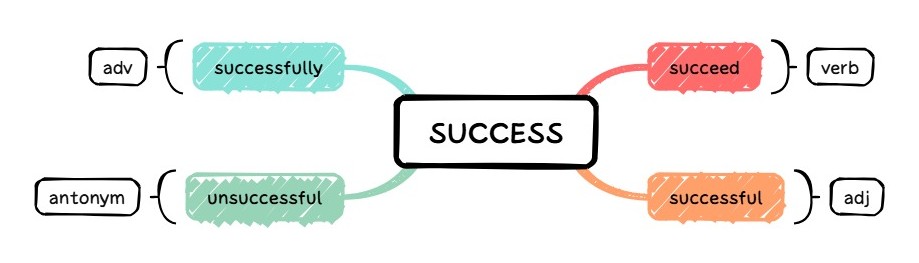
The main topic is in the center, and ideas radiate outward with no limits. This is great for learning vocabulary or brainstorming essay topics.
Example: English Vocabulary (Word Family: "SUCCESS")
- Center: SUCCESS (Noun)
- Branch 1 (Verb): Succeed (in)
- Branch 2 (Adj): Successful (e.g., a successful man)
- Branch 3 (Adv): Successfully
- Branch 4 (Antonym): Failure / Unsuccessful
Double Bubble Map - The Comparison Expert
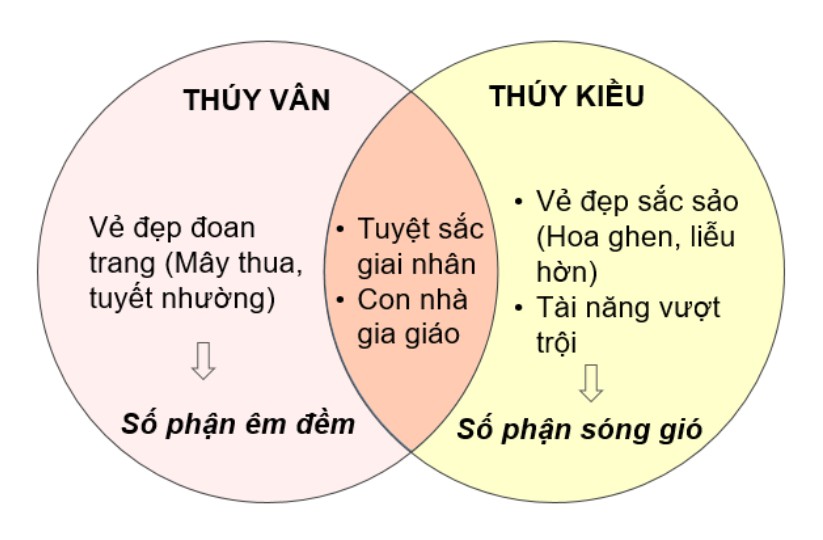
Need to compare two things? Draw two overlapping circles (like a Venn Diagram).
Example: Biology (Plant Cell vs. Animal Cell)
- Center Intersection (Similarities): Both have Nucleus, Cytoplasm, Cell Membrane.
- Left Bubble (Plant Cell Only): Has Cell Wall, Chloroplasts (for photosynthesis), Large Vacuole.
- Right Bubble (Animal Cell Only): No Cell Wall, Small or no Vacuoles, Centrioles.
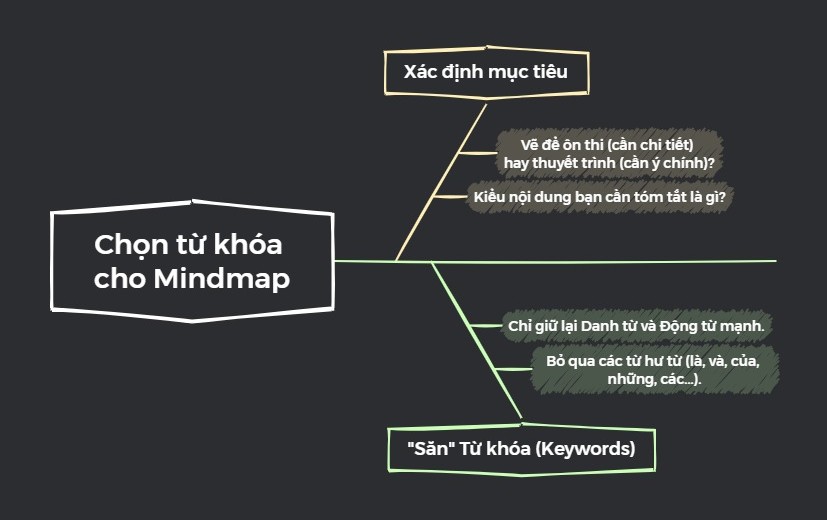
PREPARATION PROCESS: HOW TO CHOOSE "EXPENSIVE" KEYWORDS
Many students create messy maps because they skip this step. The secret lies in how you select keywords:
Define Your Goal
Are you studying for a detailed exam or making a quick presentation? What is the core message?
"Hunt" for Keywords
Golden Rule: Ignore filler words (is, and, of, the, a...). Only keep Strong Nouns and Verbs.
Original Sentence: "The Amazon Rainforest is the largest tropical rainforest in the world."
Keywords to keep: "Amazon", "Largest", "Rainforest", "World".
4-STEP GUIDE TO DRAWING A MIND MAP (STEP-BY-STEP)
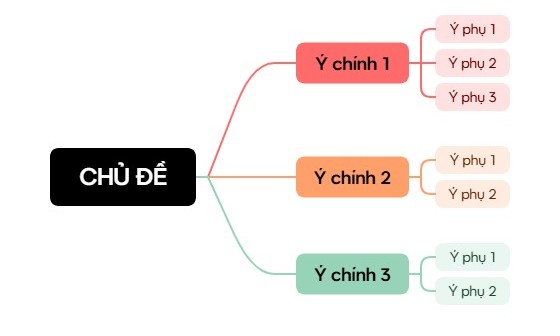
Whether you use an app or draw by hand, the process involves 4 steps. Let's take a Tree Map as an example:
- Step 1: Draw the Center
Start in the middle of the page. Use a standout image representing the topic.
- Step 2: Draw Main Branches
Thick, curved lines radiating from the center. Write keywords in CAPITAL LETTERS on top of the branch.
- Step 3: Develop Sub-branches
From the main branches, draw thinner lines spreading out like tree roots for details.
- Step 4: Decorate
Add icons, doodles, and illustrations to trigger memory.
💡 Creative Corner (Mindmap Art): If you are artistic, try the Mindmap Art style! Using colored markers, stickers, and doodles will make studying less stressful and turn your notes into a masterpiece.
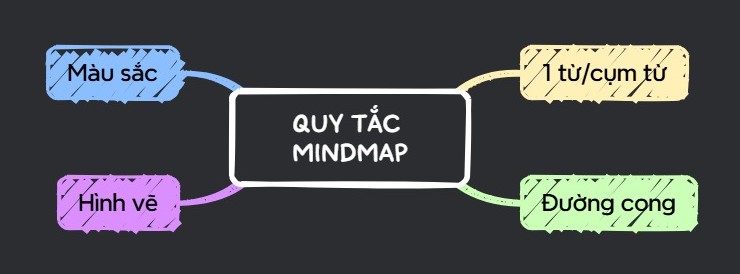
4 RULES FOR A PERFECT MIND MAP
To ensure your map is logically sound and aesthetically pleasing (score: 10/10), remember these rules:
The "1 Keyword" Rule
Each branch should hold only one keyword (or a very short phrase). Never write full sentences!
The "Curved Line" Rule
Draw natural, curved branches. Straight, rigid lines make the brain feel bored and rigid.
The "Color Coding" Rule
Give each Main Branch a specific color. All its sub-branches should follow that color theme to help categorize information visually.
Use Images & Icons
You don't need to be Picasso. Simple symbols work best: Heart ❤️, Star ⭐️, Question Mark ❓, Smiley Face 😊. If you can draw it, you can remember it.
CONCLUSION
A Mind Map isn't magic, but it is a powerful "lever" that helps you study smarter, not harder. Good luck, and may you become a "studying legend" in your next exam!
Read more: What is a Mind map? 4 types to help you learn faster & remember more