
Every exam season, your desk is flooded with reference books and thick outlines... leaving you unsure where to start.
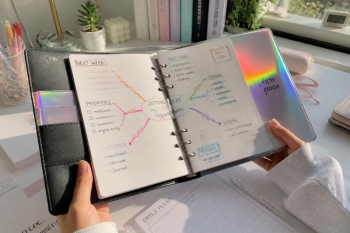
Today, we'll explore how to quickly learn and memorize lessons using "root map" mind maps - a secret weapon to "outperform" in your exams.
1. WHY IS MIND MAPPING THE "TRUE LOVE" FOR EXAM TEAMS?
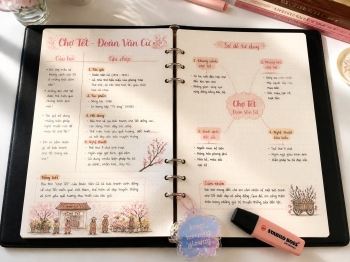
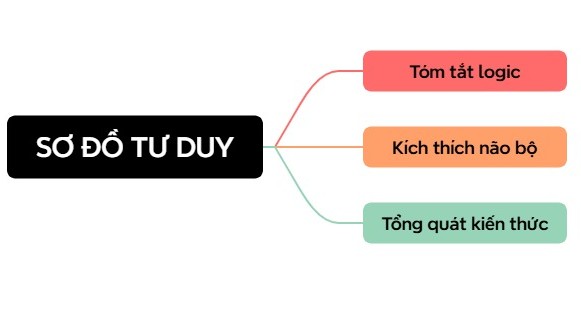
Simply put, our brains don't like pages crammed with text. The brain loves colors, images, and connections. Mind maps for exam prep do just that:
- Logical Summaries: They help you turn a thick chapter into a single page, containing only valuable keywords.
- Brain Stimulation: Colors and images activate both hemispheres of the brain, making you remember many times longer.
- See the "Forest" instead of the "Trees": You'll see the big picture of the problem, understand how ideas link together, instead of rote memorizing isolated details.
2. 5 STEPS TO "DRAW" YOUR WAY TO FASTER LEARNING WITH MIND MAPS
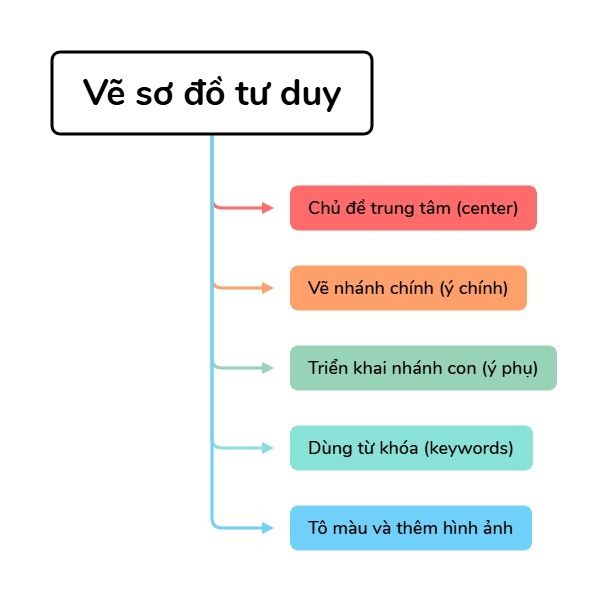
- Top: Write (or draw) the main topic of the lesson in the middle of the paper (e.g., "The Tale of Kieu," "Ho Chi Minh Campaign").
- Draw Main Branches (Main Ideas): From the center, draw large branches radiating outwards. Each branch represents a main idea (e.g., author, context, characters, content, artistry...).
- Expand Sub-branches (Sub-ideas): From the main branches, draw smaller branches to clarify details (e.g., from the "characters" branch, draw sub-branches "Thuy Kieu," "Kim Trong"...).
- Use Keywords: Absolutely do not write long sentences. Use only 1-3 most valuable keywords for each branch.
- Color and Add Images: Don't hesitate to "make-up" your mind map. Use highlighters, draw simple icons (hearts, smiley faces, arrows...). The more creative, the easier to remember!
3. "OUTPERFORM" WITH MIND MAPS FOR LITERATURE, HISTORY, GEOGRAPHY
This is the most crucial part! We will use mind maps to "tackle" the three most "challenging" subjects.
3.1. Literature mind map: summarize works "as easy as pie"
The Pain: Literary works are too long, with many characters, complex psychological analyses, easily confused.
Mind Map Solution:
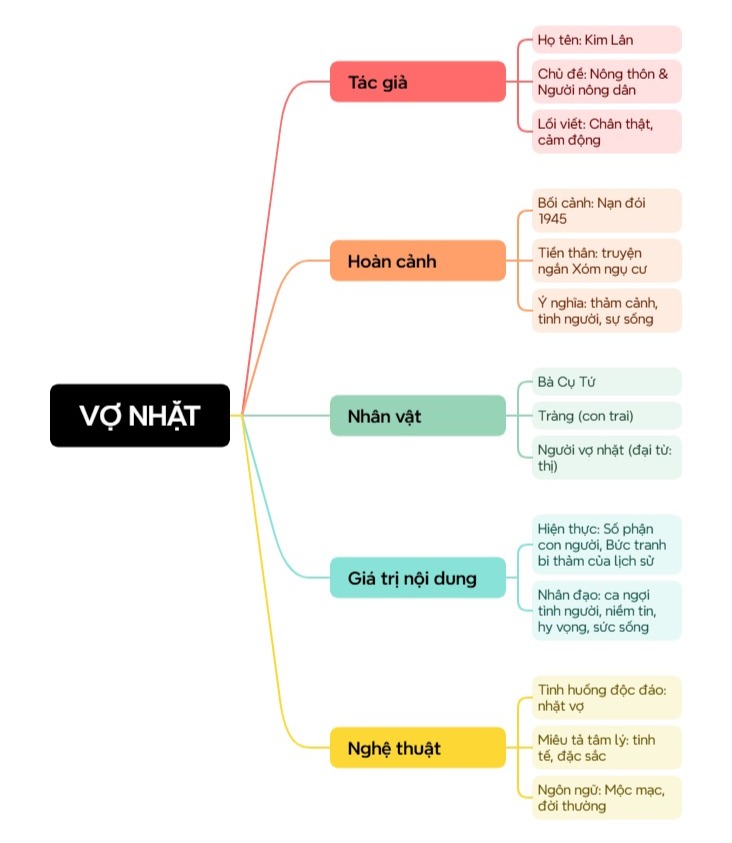
- Top: Title of the work (e.g., "The Fated Meeting" - Kim Lân).
- Branch 1: Author: Write a few keywords about Kim Lân (e.g., "peasant writer," "authentic").
- Branch 2: Context: (e.g., "1945," "famine").
- Branch 3: Characters: Draw 3 sub-branches for "Tràng," "Old Woman Tứ," "The Wife Picked Up." Each sub-branch then has smaller branches for (appearance, personality, significance).
- Branch 4: Content: (e.g., "realist value," "humanitarian value").
- Branch 5: Artistry: (e.g., "narration," "story situation," "language"). With a literature mind map, you only need to look at one page to "present" the entire work fluently without missing any points.
3.2. History mind map: "bye-bye" goldfish memory
The Pain: Tons of timelines, events, causes, effects. Learning one thing, forgetting another.
Mind Map Solution:
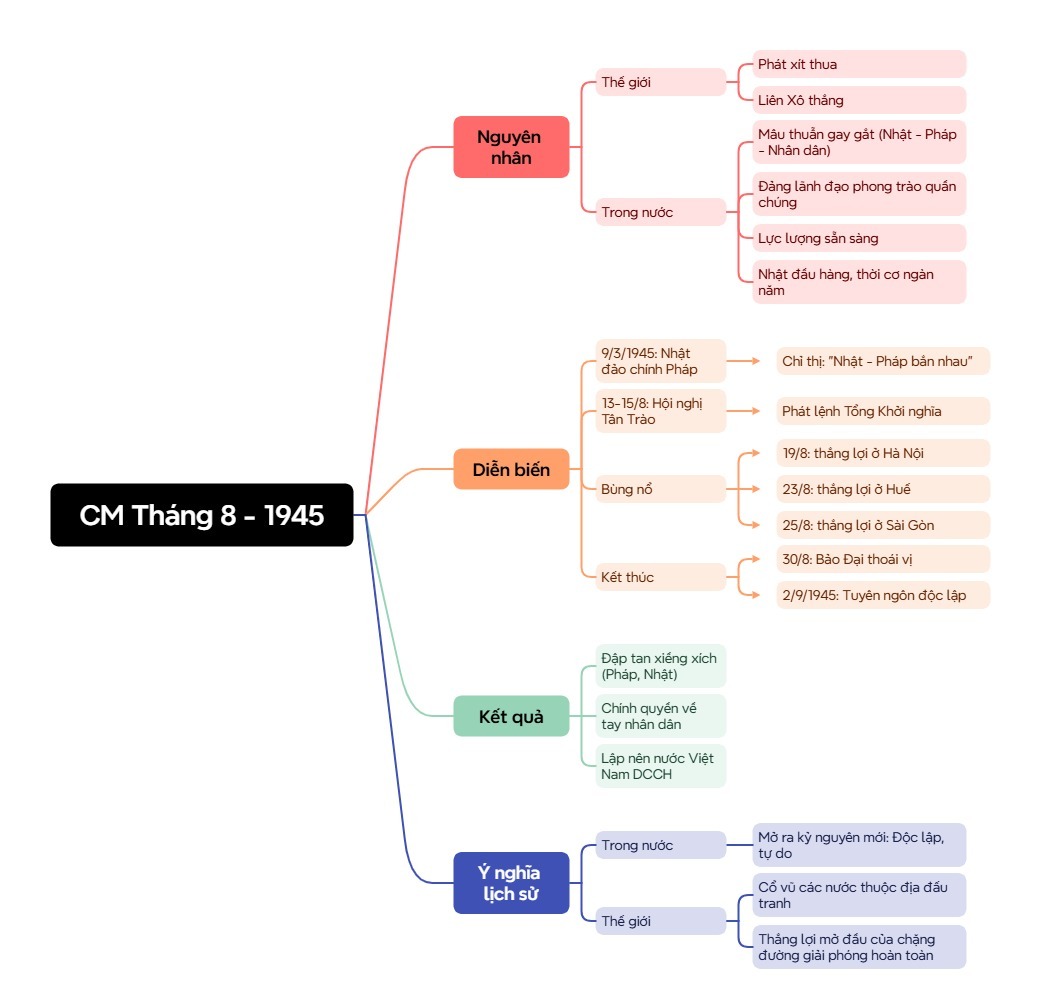
- Top: Name of a battle, a period (e.g., "August Revolution 1945").
- Branch 1: Causes: Draw 2 sub-branches "objective" (world context) and "subjective" (domestic).
- Branch 2: Developments: Draw sub-branches in chronological order (timeline), only noting time points + event keywords (e.g., "August 19: Hanoi uprising").
- Branch 3: Outcomes: What was achieved.
- Branch 4: Historical Significance: (e.g., "ushered in a new era," "inspired...").
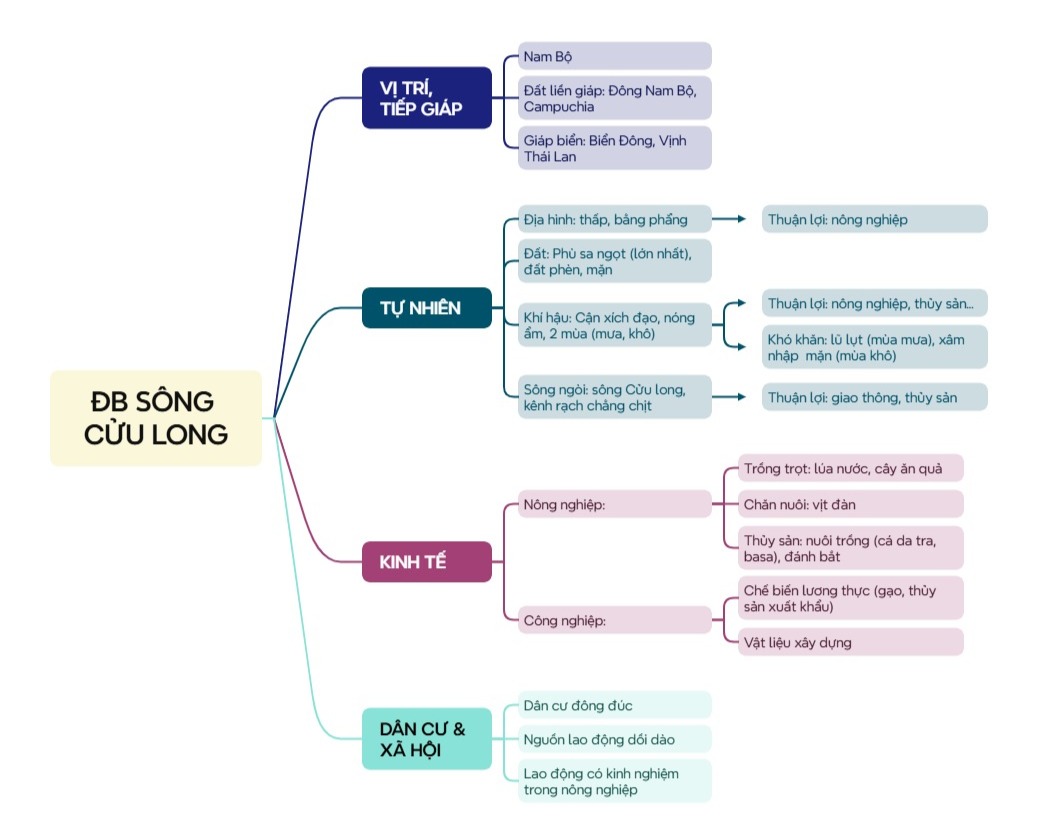
3.3. Geography mind map: "systematize" the entire atlas
The Pain: Too many statistics, charts, regional characteristics (natural, economic, demographic) all tangled up.
Mind Map Solution:
- Top: Name of an economic region (e.g., "Red River Delta").
- Branch 1: Location: (e.g., "borders whom?", "significance?").
- Branch 2: Natural Features: Sub-branches (soil, climate, rivers, minerals...).
- Branch 3: Economy: Sub-branches (agriculture, industry, services). Note 1-2 prominent keywords (e.g., "intensive rice cultivation," "leading industry").
- Branch 4: Population - Society: (e.g., "most populous," "skilled labor").
- Branch 5: Issues: (e.g., "pollution," "structural shift"). When using a geography mind map, you'll gain an overview for comparing regions, a crucial skill for geography exams.
CONCLUSION: DON'T JUST READ, START DRAWING!
Learning quickly with mind maps isn't magic; it's a scientific method. You might feel a bit hesitant at first, but just practice with 1-2 lessons, and you'll find it "addictive." Instead of burying your face in books for 3 hours, try spending 30 minutes summarizing the lesson with a mind map. The results will surprise you!
Wishing our 2K team (Gen Z/Alpha) great success!
See more: What is a Mind map? 4 types to help you learn faster & remember more