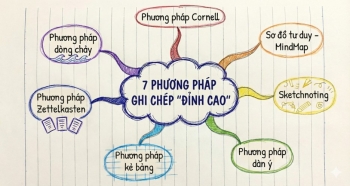

Did you know that using a Mind Map can help you retain formulas, numbers, and symbols up to 3 times longer than rote memorization?
If you are drowning in a sea of equations and chemical reactions, it's time to change your strategy. Let’s explore how to apply specific types of Mind Maps to conquer Math, Physics, and Chemistry effectively.
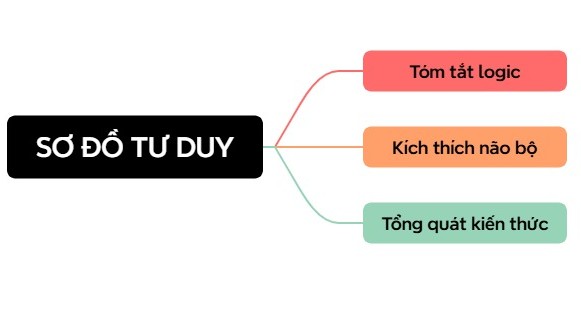
Read more: What is a Mind Map? The Ultimate A-Z Guide for teens to Study smarter & Ace exams
1. MIND MAPS FOR MATH: Mastering Algebra & Processes
Mathematics is defined by clear hierarchies and sequential problem-solving steps. To master this, we need structure.
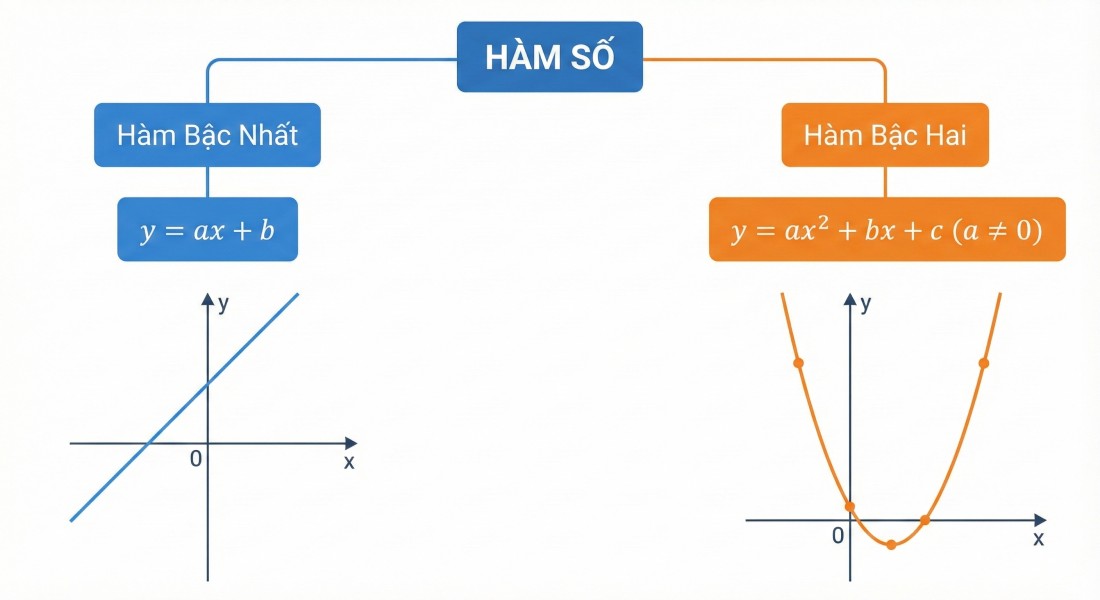
Use the Tree Map for Algebra & Geometry
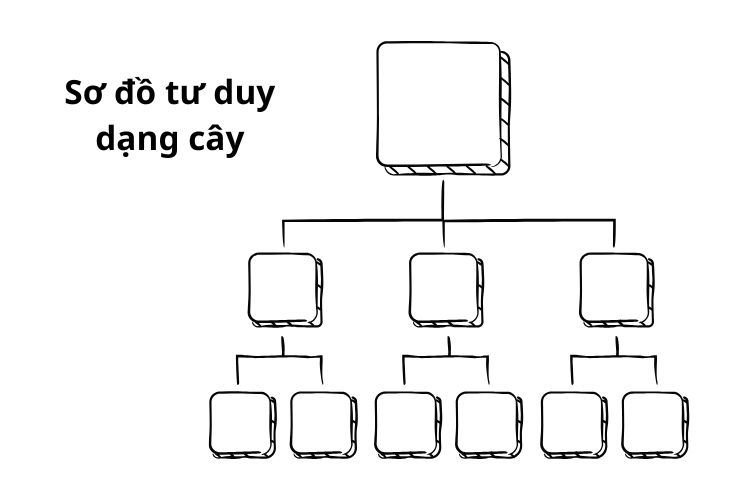
The Tree Map is the "King" of classification. Use it to systematize knowledge for an entire chapter.
-
Root (Trunk): Chapter Name (e.g., Functions).
-
Large Branches: Types of Functions (Linear, Quadratic).
-
Small Branches: Formulas ($y = ax + b$), Graph shapes, and Domain/Range.
-
Why it works: It breaks down complex topics into manageable categories.
Use the Flow Map for Problem-Solving Processes
Math isn't just about what things are, but how to solve them. Boxes connected by arrows help you remember steps that cannot be reversed.
-
Example: Solving a Trigonometric Equation.
-
Step 1: Convert to basic form → Step 2: Find solutions → Step 3: Check conditions → Step 4: Final Conclusion.
-
-
Why it works: It creates a mental algorithm so you never skip a step during an exam.

2. MIND MAPS FOR PHYSICS: Deep Understanding of Phenomena
Physics connects abstract formulas with real-world phenomena and changing processes.
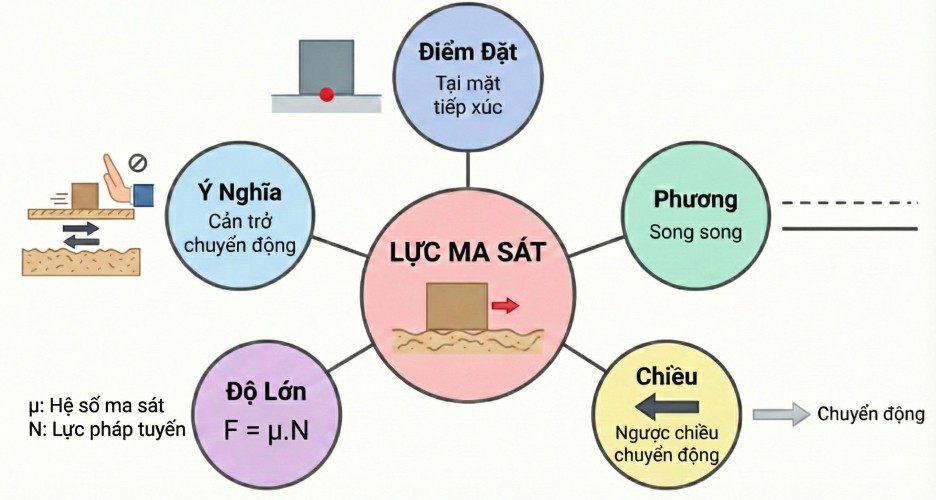
Use the Spider Map for Physical Quantities
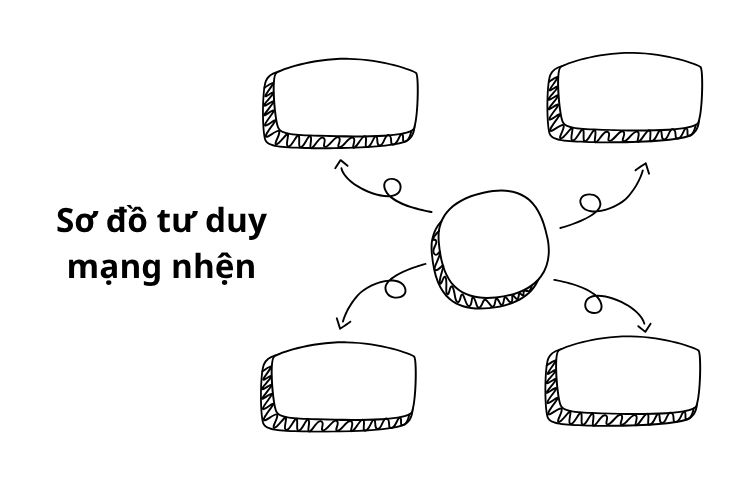
This format is perfect for summarizing extensive details surrounding a single central topic.
-
Center: The Quantity (e.g., Friction Force).
-
Legs (Sub-topics): Point of application, Direction, Magnitude (The Formula), Real-world applications.
-
Why it works: It creates a "snapshot" of a concept, ensuring you don't miss any properties of a physical force.
Use the Flow Map for Experiments
Use this to describe how machines work or the cycle of an experiment.
-
Example: The operating cycle of a Heat Engine (Intake $\rightarrow$ Compression $\rightarrow$ Combustion $\rightarrow$ Exhaust).
-
Why it works: It visualizes the process of change, which is the core of Physics.

3. MIND MAPS FOR CHEMISTRY: Reaction Chains & Comparisons
Chemistry is full of substances that look similar and long chains of reactions that are easy to mix up.
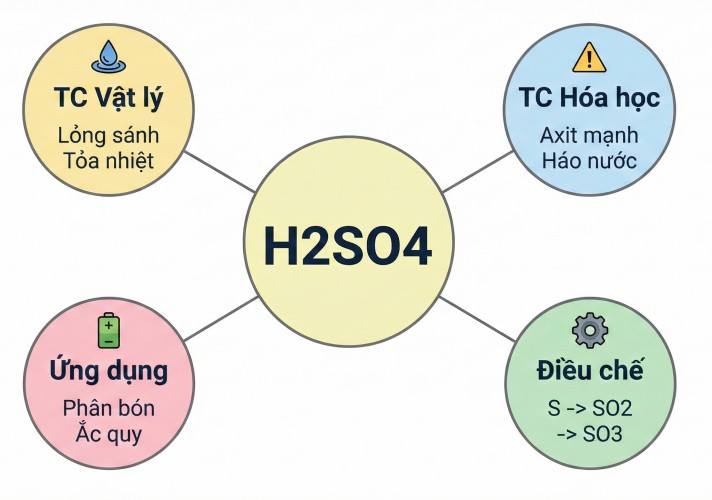
Use the Spider Map for Elements/Compounds
-
Center: Chemical Formula (e.g., H_2SO_4).
-
Branches: Physical Properties, Chemical Properties, Preparation methods, Applications.
-
Why it works: It acts as a "profile card" for each chemical substance.
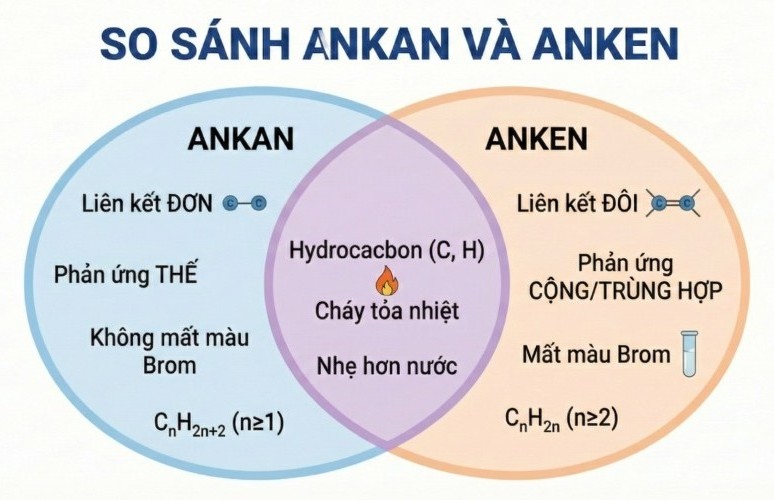
Use the Venn Diagram (or Double Bubble Map) for Comparison
Draw two overlapping circles to find similarities and differences between two substances.
-
Example: Compare Alkanes vs. Alkenes.
-
Intersection (Same): Both are Hydrocarbons.
-
Separate parts (Different): Single bonds vs. Double bonds.
-
-
Why it works: It prevents the common mistake of confusing two similar organic compounds.
4. PRO TIPS: MIND MAPPING FOR STEM STUDENTS
To make memorizing formulas effortless, apply these "Natural Science" hacks:
Turn Keywords into Symbols
The golden rule is to remove "fluff" words and keep only strong nouns/verbs. For STEM, use symbols:
-
Replace "precipitate" with a downward arrow.
-
Replace "reacts with" with a plus sign (+).
-
Replace "gas evolution" with an upward arrow .
Color Coding Strategy
Segment your knowledge visually.
-
Example: Use RED for Acids and BLUE for Bases. Your brain will instantly recognize the chemical nature of the substance based on color alone.
Minimalist Doodles
You don't need to be an artist. Simple sketches work best for memory triggers:
-
A coiled spring for Elastic Potential Energy (Physics).
-
A test tube for Reactions (Chemistry).
-
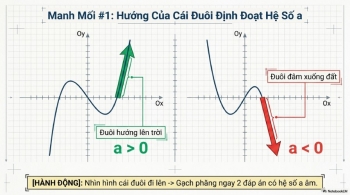
A parabola curve for Quadratic Functions (Math).

CONCLUSION: Don't Let Formulas Haunt You!
A Mind Map is not just a colorful drawing; it is a "brain upgrade" tool. It transforms dry, boring lists of Math, Physics, and Chemistry formulas into logical, easy-to-digest pictures. Instead of rote learning, let your left brain (logic) and right brain (creativity) work together to conquer your STEM subjects effortlessly.

Don't worry about drawing "ugly" maps. Start tonight by summarizing your latest Algebra chapter with a simple Tree Map!